Fire Extinguishers: Types, Uses & Guide (2026)
Navigating fire safety demands knowledge of extinguisher types, their applications, and proper usage—a crucial guide for households and businesses alike, as of today’s date.

Fire extinguishers are indispensable safety devices, designed to control or extinguish small fires, offering crucial protection for life and property. Understanding their operation and limitations is paramount, as they are not intended for large, rapidly spreading fires – immediate evacuation and professional fire service intervention are vital in such scenarios.
The effectiveness of a fire extinguisher hinges on selecting the correct type for the specific fire class. Utilizing the wrong extinguisher can be ineffective, even dangerous, potentially exacerbating the situation. Different extinguishing agents target different fuel sources, making proper classification essential.
This guide, current as of May 3rd, 2026, provides a comprehensive overview of fire extinguisher types, their corresponding uses, and the colour coding system employed for quick identification. Knowledge of these systems, as highlighted by resources like Fire Equipment Online and Test and Tag, empowers individuals to respond effectively in emergency situations, potentially minimizing damage and saving lives.
Understanding Fire Classes
Categorizing fires into distinct classes is fundamental to selecting the appropriate extinguishing agent. These classifications, crucial for effective fire suppression, are based on the fuel source initiating the combustion. Misidentifying a fire class can render an extinguisher useless, or even worsen the situation, emphasizing the importance of accurate assessment.
Currently, six primary fire classes are recognized: A (ordinary combustibles), B (flammable liquids), C (electrical fires), D (combustible metals), E (electrical – an alternative designation for C), and F (cooking oils and fats); Each class demands a specific approach to extinguish it safely and efficiently.
Understanding these distinctions, as detailed by resources like The Local Guys Test and Tag, is vital for both residential and commercial settings. The 2021 International Building Code (IBC) also emphasizes proper fire protection features. Correctly identifying the fire class allows for informed decisions regarding extinguisher selection and usage, maximizing safety and minimizing potential damage.
Class A Fires: Ordinary Combustibles
Class A fires involve common materials that readily burn, leaving an ash residue. These encompass everyday items like wood, paper, cloth, rubber, and many plastics. They are characterized by being surface fires, meaning the fuel itself is burning, not just flammable vapors. Effective suppression focuses on cooling the material below its ignition temperature and penetrating the fuel source.
Water is traditionally the most effective extinguishing agent for Class A fires, due to its excellent cooling properties. However, other agents like foam and dry chemical extinguishers are also suitable, offering versatility in different scenarios.
Fire Equipment Online highlights the importance of selecting the correct extinguisher for the specific fuel involved. Understanding the nature of ordinary combustibles and the appropriate extinguishing methods is paramount for ensuring safety and preventing fire escalation, as emphasized by current fire safety guidelines.
Class B Fires: Flammable Liquids
Class B fires involve flammable liquids and gases, posing a unique challenge due to their rapid spread and potential for re-ignition. These fuels include gasoline, oil, grease, solvents, and propane. Unlike Class A fires, Class B fires don’t leave ash; they involve vaporizing liquids that ignite easily.
Water is ineffective on Class B fires and can actually spread the flames. Instead, extinguishing agents that smother the fire by cutting off the oxygen supply are crucial. Foam, carbon dioxide (CO2), and dry chemical extinguishers are commonly used.
Dry chemical extinguishers, particularly those rated for BC or ABC fires, are versatile and effective. CO2 extinguishers displace oxygen, while foam creates a barrier between the fuel and the air. Choosing the right extinguisher, as emphasized by fire safety resources, is vital for controlling these dangerous blazes and preventing escalation.
Class C Fires: Electrical Fires
Class C fires involve energized electrical equipment, presenting a significant shock hazard alongside the fire risk. This includes fires originating in motors, switchboards, appliances, and wiring. The primary danger isn’t necessarily the fire itself, but the potential for electrocution if water-based extinguishing agents are used.
Never use water on a Class C fire! It conducts electricity and can create a lethal pathway. Instead, utilize non-conductive extinguishing agents like carbon dioxide (CO2) or dry chemical extinguishers specifically rated for Class C fires.
CO2 extinguishers work by displacing oxygen, effectively smothering the flames without leaving a residue. Dry chemical extinguishers interrupt the chemical reaction of the fire. Once the electrical source is de-energized, the fire can then be treated as a Class A fire, if ordinary combustibles are involved. Prioritizing safety and selecting the appropriate extinguisher is paramount when dealing with electrical fires.
Class D Fires: Combustible Metals
Class D fires are unique and highly dangerous, involving combustible metals such as magnesium, titanium, zirconium, sodium, and potassium. These metals burn at extremely high temperatures and react violently with water, potentially causing explosions or spreading the fire.
Ordinary fire extinguishers are ineffective and can even worsen a Class D fire. Specialized dry powder extinguishing agents are required, designed to smother the metal fire and create a heat-absorbing crust. These agents don’t chemically react with the metal but physically isolate it from oxygen.
It’s crucial to identify the specific metal involved to select the correct extinguishing agent, as different metals require different formulations. Attempting to extinguish a Class D fire with the wrong agent can be catastrophic. Professional fire services are often best equipped to handle these complex and hazardous situations, ensuring safety and effective suppression.
Class E Fires: Electrical Fires (Alternative Designation)
Class E fires, an older designation, specifically refer to fires involving energized electrical equipment. This includes motors, switchboards, wiring, and appliances where electricity is the ignition source. While the term is less commonly used now, understanding it remains important due to historical references and some regional classifications.

The primary hazard with electrical fires isn’t necessarily the electrical components themselves, but the potential for electrocution. Never use water on an electrical fire! Water conducts electricity, posing a severe shock risk to the operator. Instead, utilize non-conductive extinguishing agents like carbon dioxide (CO2) or dry chemical extinguishers.
Once the power source is safely disconnected, a Class A extinguisher may be used on any resulting combustible materials. Always prioritize personal safety and ensure the electricity is shut off before attempting any fire suppression efforts. Modern classifications often incorporate electrical fires into Class C.
Class F Fires: Cooking Oils & Fats
Class F fires involve cooking oils and fats, presenting a unique challenge due to their high ignition temperature and tendency to splatter when exposed to water. These fires commonly occur in commercial kitchens, but are also a risk in residential settings. Attempting to extinguish these fires with water can cause a dangerous flare-up, spreading the burning oil and intensifying the blaze.
Wet chemical fire extinguishers are specifically designed for Class F fires. They contain a liquid agent that saponifies the burning oil, forming a soapy foam blanket that smothers the fire and cools the oil below its re-ignition temperature. This prevents re-flashing and quickly controls the situation.
Using the correct extinguisher is vital. Never use water, foam, or dry chemical extinguishers on cooking oil fires. Proper training and readily available wet chemical extinguishers are essential for kitchen fire safety.

Types of Fire Extinguishers
Various extinguisher types exist, each formulated for specific fire classes—water, foam, dry chemical, carbon dioxide, wet chemical, and clean agent—ensuring optimal safety.
Water Fire Extinguishers
Water fire extinguishers are a cornerstone of basic fire protection, primarily designed for tackling Class A fires—those involving ordinary combustibles like wood, paper, cloth, plastic, and rubber. These extinguishers operate by cooling the burning material below its ignition temperature, effectively suppressing the flames. They are incredibly effective and environmentally friendly, utilizing water as the extinguishing agent.
However, it’s crucial to understand their limitations. Water extinguishers are absolutely unsuitable for use on flammable liquid (Class B) or electrical (Class C) fires, as water conducts electricity and can spread flammable liquids, exacerbating the situation. Using a water extinguisher on these types of fires poses a significant safety risk.
These extinguishers are commonly found in homes, offices, and schools, where Class A fire hazards are prevalent. Regular inspection and maintenance are vital to ensure their readiness when needed. They are a cost-effective and reliable first line of defense against common fire hazards.
Uses for Water Extinguishers (Class A Fires)
Water extinguishers excel at extinguishing fires fueled by common, everyday materials – precisely what defines a Class A fire. Think of burning paper in an office wastebasket, a wood pile catching alight in a workshop, or upholstery igniting in a living room. These are all scenarios where a water extinguisher is the appropriate choice.
The cooling effect of water is paramount; it rapidly lowers the temperature of the burning material, removing the heat source necessary for combustion. This isn’t simply about dousing the flames; it’s about preventing reignition by ensuring the material remains below its ignition point.
Effective application involves directing the spray at the base of the flames, not into the flames themselves. A sweeping motion ensures comprehensive coverage. Remember, water extinguishers are best suited for surface fires and may not penetrate deeply embedded materials. Always prioritize personal safety and evacuation before attempting to extinguish any fire.
Foam Fire Extinguishers
Foam fire extinguishers represent a versatile solution, effectively tackling both Class A and Class B fires, making them a valuable asset in diverse environments. They operate by creating a blanket of foam that smothers the fire, cutting off the oxygen supply and simultaneously cooling the burning material.
The foam’s unique properties allow it to spread across the surface of flammable liquids, preventing reignition by suppressing the release of flammable vapors. This is particularly crucial when dealing with spills of gasoline, oil, or other combustible liquids. For Class A fires, the foam penetrates the material, providing sustained cooling and preventing flare-ups.
These extinguishers are commonly found in areas where both solid combustibles and flammable liquids are present, such as garages, workshops, and industrial settings. Regular inspection and maintenance are vital to ensure the foam-generating components function correctly. Always follow the manufacturer’s instructions for proper operation and safety precautions.
Foam Extinguisher Applications (Class A & B Fires)
Foam extinguishers demonstrate exceptional efficacy on Class A fires, involving ordinary combustibles like wood, paper, and textiles, by penetrating deeply and providing sustained cooling. This minimizes the risk of re-ignition, a critical factor in complete fire suppression.
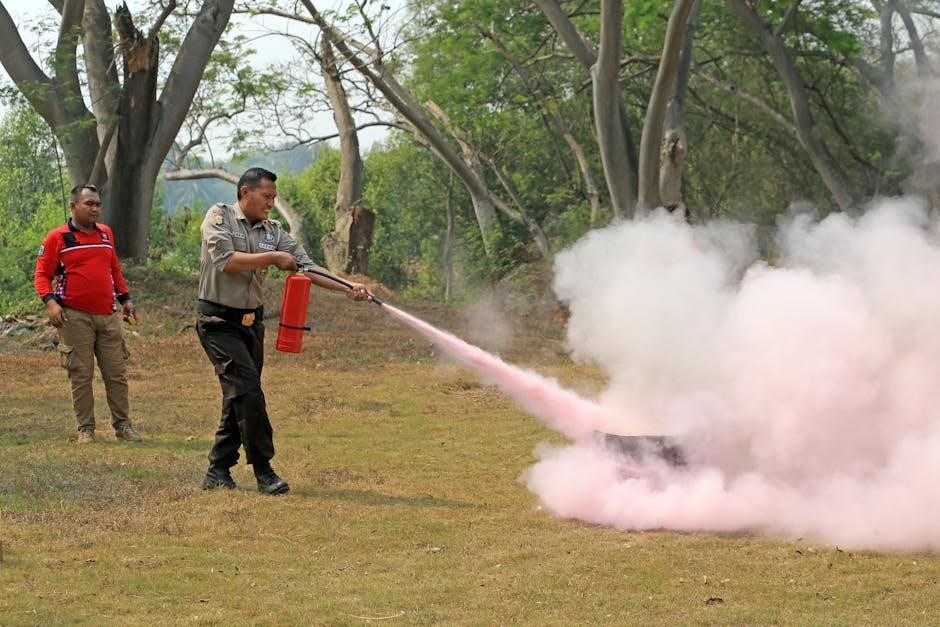
However, their strength truly shines when confronting Class B fires—those fueled by flammable liquids such as gasoline, oil, and solvents. The foam creates a suppressing blanket, effectively cutting off the oxygen supply and preventing the release of flammable vapors. This action quickly extinguishes the flames and inhibits reignition.
Ideal application areas include garages, workshops, and areas storing flammable liquids. They are also suitable for areas with both types of fire hazards. Remember, never use foam extinguishers on electrical fires (Class C) due to the conductive nature of the foam. Proper training and understanding of fire classes are essential for safe and effective use.
Dry Chemical Fire Extinguishers
Dry chemical fire extinguishers are incredibly versatile, employing a powdered agent to interrupt the chemical reaction of a fire. These are among the most common types found in homes and businesses due to their broad applicability and relatively low cost.
The dry chemical agent works by inhibiting the chain reaction that sustains combustion, quickly knocking down flames. They are particularly effective on fast-spreading fires, offering rapid suppression. However, the discharged chemical can create a significant mess, requiring thorough cleanup post-use.
Dry chemical extinguishers are categorized as either ABC or BC, denoting the classes of fires they can safely extinguish. ABC extinguishers tackle Class A (ordinary combustibles), Class B (flammable liquids), and Class C (electrical) fires, while BC extinguishers are specifically designed for flammable liquids and gases. Always verify the extinguisher’s rating before attempting to use it.
ABC Dry Chemical Extinguishers: Multi-Purpose Use
ABC dry chemical extinguishers represent a significant advantage in fire safety due to their remarkable versatility. These extinguishers are uniquely formulated to combat Class A fires – involving ordinary combustibles like wood, paper, and cloth – as well as Class B fires fueled by flammable liquids, and even Class C fires originating from electrical equipment.
The multi-purpose capability stems from the specific chemical composition of the extinguishing agent, typically monoammonium phosphate. This agent not only smothers the fire but also creates a barrier that prevents re-ignition, offering a comprehensive solution. However, it’s crucial to remember that while versatile, they can cause damage to sensitive electronics.
Their widespread availability and relatively affordable price point make them a popular choice for homes, offices, and vehicles. Proper training on their operation is essential to ensure effective and safe use during an emergency. Regular inspection and maintenance are also vital for optimal performance.
BC Dry Chemical Extinguishers: For Flammable Liquids & Gases
BC dry chemical extinguishers are specifically designed to tackle fires involving flammable liquids and gases – Class B fires – and those involving energized electrical equipment – Class C fires. Unlike ABC extinguishers, they don’t effectively combat ordinary combustibles like wood or paper, making their application focused and precise.
These extinguishers utilize chemicals like sodium bicarbonate or potassium bicarbonate, which interrupt the chemical reaction of the fire, effectively smothering the flames. They leave behind a powdery residue, however, which can be corrosive and require thorough cleanup post-use. Crucially, never use a BC extinguisher on a Class A fire, as it could spread the blaze.
They are commonly found in environments where flammable liquids are present, such as garages, workshops, and industrial settings. Proper training is paramount, as misapplication can be ineffective or even dangerous. Regular maintenance and inspection are essential to ensure readiness in an emergency.
Carbon Dioxide (CO2) Fire Extinguishers
Carbon dioxide (CO2) fire extinguishers are highly effective against Class B and C fires – flammable liquids and energized electrical fires – offering a clean extinguishing agent that leaves no harmful residue. CO2 works by displacing oxygen, essentially suffocating the fire without damaging sensitive electronic equipment.
However, CO2 extinguishers have limitations. They are less effective in open or windy environments, as the gas can dissipate quickly. Furthermore, the discharged CO2 is extremely cold and can cause frostbite upon contact with skin, requiring careful handling. They are not suitable for Class A fires involving ordinary combustibles.
CO2 extinguishers are frequently used in laboratories, mechanical rooms, and areas with sensitive electronic equipment. Their clean extinguishing properties minimize collateral damage. Regular inspection and maintenance are vital to ensure the cylinder is fully charged and the discharge mechanism functions correctly.
CO2 Extinguisher Effectiveness (Class B & C Fires)
Carbon dioxide (CO2) extinguishers demonstrate exceptional effectiveness on both Class B and Class C fires due to their unique extinguishing mechanism. For Class B fires – involving flammable liquids like gasoline, oil, and solvents – CO2 smothers the fire by reducing oxygen concentration, interrupting the combustion process;
Regarding Class C fires, those involving energized electrical equipment, CO2’s non-conductive nature is paramount. Unlike water-based extinguishers, CO2 poses no risk of electrical shock, making it a safe choice for these hazardous situations. The cold, non-residual discharge minimizes damage to sensitive electronics.
However, effectiveness diminishes in drafty areas where CO2 can disperse rapidly. Proper aiming and proximity to the fire are crucial. While highly effective, CO2 doesn’t cool the fuel, increasing the risk of re-ignition if the source isn’t addressed. Regular training on proper usage is essential for optimal results.
Wet Chemical Fire Extinguishers
Wet chemical fire extinguishers are specifically engineered for tackling fires involving cooking oils and fats – categorized as Class F fires. These extinguishers contain a unique potassium acetate-based agent that saponifies the burning oil, forming a soapy foam blanket. This blanket effectively seals off the fuel source, preventing re-ignition and quickly extinguishing the flames.
Unlike other extinguisher types, wet chemical agents cool the oil below its auto-ignition temperature, further reducing the risk of flare-ups. They are particularly effective in commercial kitchens, restaurants, and food processing facilities where deep-fat fryers are prevalent.
The discharge is gentle, minimizing splatter and preventing the spread of burning oil. However, wet chemical extinguishers are generally not suitable for use on other fire classes. Proper training is vital to ensure correct application and maximize safety. Regular inspection and maintenance are also crucial for reliable performance.
Wet Chemical Extinguishers for Kitchen Fires (Class F)
Class F fires, originating from cooking oils, fats, and grease, demand specialized suppression – and wet chemical extinguishers deliver precisely that. These extinguishers utilize a potassium acetate-based agent, uniquely designed to react with hot oils, creating a soapy foam. This foam effectively smothers the fire, preventing oxygen from fueling the flames and cooling the burning substance.
Crucially, the saponification process forms a non-combustible layer, inhibiting re-ignition. Unlike water, which can violently splatter hot oil, wet chemical agents offer a controlled and safe application. They are indispensable in commercial kitchens, restaurants, and any environment with deep fryers.
Effective use requires directing the agent onto the surface of the burning oil, allowing the foam to spread and cover the entire area. Regular maintenance and professional inspection are paramount to ensure optimal functionality when seconds count. Remember, using the wrong extinguisher on a Class F fire can be extremely dangerous.
Clean Agent Fire Extinguishers
Clean agent fire extinguishers represent a modern advancement in fire suppression, offering powerful protection with minimal residue and environmental impact. Utilizing agents like Halotron or FE-36, these extinguishers are ideal for sensitive environments where damage from traditional extinguishing methods is a concern.
They effectively combat Class A, B, and C fires, making them versatile for various applications. Unlike dry chemical extinguishers, clean agents leave no sticky residue, reducing cleanup costs and downtime. This is particularly valuable for protecting electronic equipment, servers, and valuable documents.
The extinguishing process involves interrupting the chemical reaction of the fire, quickly suppressing flames without causing collateral damage. Clean agent extinguishers are often favored in museums, data centers, and telecommunications facilities. However, proper ventilation is crucial after discharge, and professional servicing is essential for maintaining their effectiveness.
Fire Extinguisher Colour Coding
Fire extinguisher colour coding is a globally recognized system designed for quick identification of the extinguishing agent and the types of fires it’s effective against, enhancing safety and response times. The body of the extinguisher indicates its contents, while a coloured band denotes the fire classes it can handle.
Red signifies water or foam extinguishers, primarily for Class A fires – ordinary combustibles like wood, paper, and textiles. Yellow indicates dry chemical extinguishers suitable for Class B and C fires – flammable liquids and electrical fires. Black designates carbon dioxide (CO2) extinguishers, also effective on Class B and C fires, leaving no residue.
Silver or grey often represents clean agent extinguishers, ideal for sensitive equipment. While variations exist, understanding these core colours is vital for selecting the correct extinguisher in an emergency. Proper labelling and regular inspection are crucial to ensure colour coding remains accurate and visible, contributing to a safer environment.