The TASCAM DR‑40 is a compact, versatile digital recorder designed for musicians, podcasters, and field producers. It offers dual‑track recording, high‑resolution audio, and built‑in microphones, making it ideal for on‑the‑go sessions and studio use. It records up to 24‑bit/96 kHz and USB transfers to PC!

System Overview
At its core, the TASCAM DR‑40 employs a dual‑channel 24‑bit/96 kHz audio engine that captures pristine sound. The recorder’s 3‑band EQ shapes tone on each track, the built‑in stereo mic offers a convenient solution for interviews or live shows and audio mix. XLR/TRS combo inputs, each with 48 V phantom power, give users the flexibility to connect high‑end microphones or line‑level. The device supports SD/SDHC cards up to 128 GB, and clock10 guarantees time‑stamping for multi‑track synchronization. Power is supplied by a single AA battery or a 3‑cell Li‑ion pack, delivering up to 12 hours of recording. The 2.5‑inch LCD displays track levels, recording status, and menu navigation, while the headphone output offers 1‑mW level monitoring. Firmware is upgradable via the TASCAM software suite, ensuring compatibility with codecs and workflow enhancements. USB‑A connectivity allows direct transfer to a PC in mass‑storage or audio‑class mode, enabling seamless integration with DAWs. The DR‑40’s rugged chassis measures 6.7 × 5.0 × 1.4 inches and weighs 0.9 lb, making it ideal for on‑the‑go use. Its compact form factor, versatile connectivity, and robust build quality make it essential tool for musicians, podcasters, and field producers alike and audio!
- 24‑bit/96 kHz recording with high‑res ADCs and pad
- Dual‑track interface XLR/TRS inputs
- Built‑in stereo mic with adjustable gain and pad
- USB‑A port for PC transfer in mass‑storage and audio‑class modes
- SD card slot up to 128 GB write speeds
- Battery life up to 12 hours on AA or 8 hours on Li‑ionand
- 2.5‑inch LCD with 128×64 pixel resolution for
- Firmware upgradable via TASCAM suite for new codecs!
Power and Connectivity
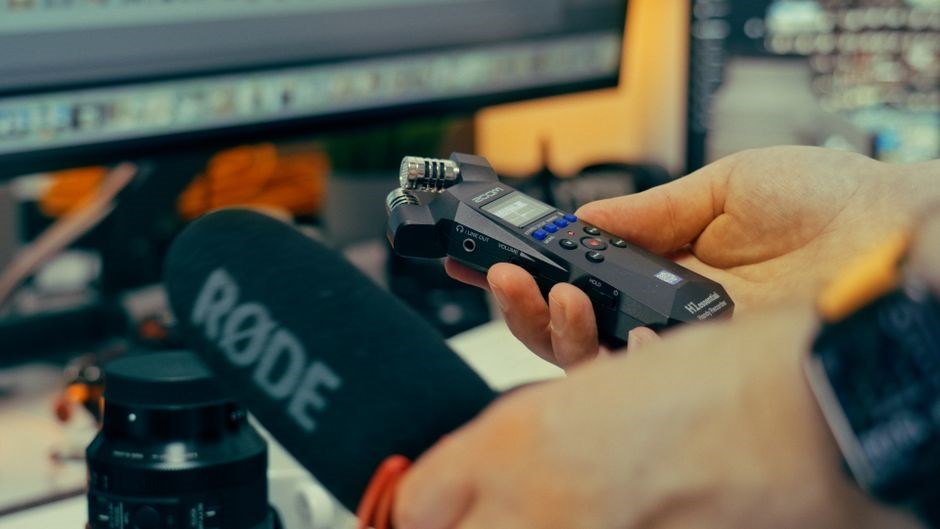
The TASCAM DR‑40 offers versatile power options and robust connectivity to suit a variety of recording scenarios. It can be powered by a single 1.5‑V AA battery pack, a 3‑cell Li‑ion rechargeable pack, or an external 12‑V DC adapter. The battery life ranges from 12 hours on AA cells to 8 hours on the Li‑ion pack, providing ample time for field work or studio sessions. It features two XLR/TRS combo inputs with 48 V phantom power, allowing the use of professional condenser microphones or line‑level sources. Each input has a pad switch for high‑level signals. The built‑in stereo microphone can be used as a standalone source or for quick interviews. USB‑A connectivity enables direct transfer to a computer in mass‑storage mode or as an audio‑class interface for DAW integration. The recorder also supports SD/SDHC cards up to 128 GB, with write speeds of 30 MB/s for reliable multi‑track recording. The headphone output offers 1‑mW monitoring, and a 3‑pole TRS jack provides a balanced line‑out. Firmware updates are available via the TASCAM software, ensuring compatibility with new codecs and features. Overall, the DR‑40’s power flexibility and comprehensive connectivity make it a reliable tool for professionals and hobbyists alike.
The DR‑40’s intuitive interface includes a 2.5‑inch LCD that displays track levels, recording status, and menu navigation. Users can also connect a 3‑pole TRS line‑out to external monitors. Its compact chassis measures 6.7×5.0×1.4 inches, weighing 0.9 lb, making it portable for live gigs or studio sessions.!!!

Physical Controls and Layout
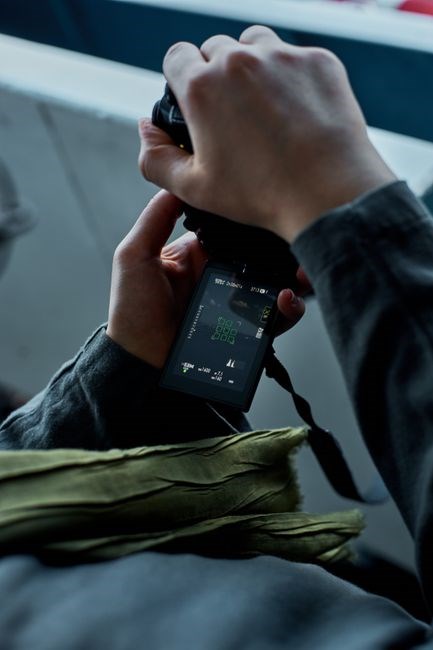
The TASCAM DR‑40’s front panel is engineered for rapid, intuitive use. Centered is a 2.5‑inch LCD that displays track levels, recording status, and menu navigation. Above the display are two large push‑buttons labeled “REC” and “PLAY”; the “REC” button also functions as a stop button when held. A 3‑position rotary switch selects the input source: “MIC,” “LINE,” or “TRIM.” Each input has a dedicated pad switch to attenuate high‑level signals. The left side hosts a 3‑pole TRS jack for balanced line‑out and a 1‑mW headphone jack with a volume knob. The right side features a 3‑pole TRS jack for line‑in and a 3‑pole TRS jack for the built‑in stereo microphone. The rear panel contains a USB‑A port for data transfer, a 12‑V DC input, and a 3‑pole TRS jack for external line‑in. A power switch on the back and a battery‑indicator LED show remaining charge. The chassis measures 6.7×5.0×1.4 inches and weighs 0.9 lb, making it highly portable. All controls are ergonomically spaced for one‑hand operation, and LED indicators provide clear status feedback. The buttons are rated for 10,000 actuations, and the rotary switch offers audible click feedback. The DR‑40’s intuitive layout ensures users can set up and start recording in seconds, even in high‑pressure environments. Its intuitive menu and responsive controls let musicians capture high‑fidelity performances without extra gear or complex setups, and seamless workflow soon.
The device’s rugged ABS housing protects against accidental drops, while the power jack ensures operation. The layout prioritizes quick access, enabling users to start recording in low‑light conditions.!

Recording Functionality
The DR‑40 records up to 24‑bit/96 kHz, supports stereo and mono modes, and offers automatic level control. Dual‑track recording lets you capture separate sources, while the built‑in stereo mic delivers clear, room‑wide sound. USB transfer enables instant editing. Enjoy!!!
Recording Modes
The DR‑40 offers three primary recording modes: Stereo, Mono, and Dual‑Track. In Stereo mode, the built‑in stereo microphone captures a wide, natural soundstage, ideal for ambient recordings or interviews. Mono mode uses a single channel, providing a focused, punchy capture suitable for vocals or single instruments. Dual‑Track mode records two independent channels simultaneously, allowing separate mixing or overdubbing later. For field recordings, the Stereo mode captures ambient sound with minimal distortion. The Mono mode is ideal for single‑voice interviews or instruments that require a tight, focused sound. The recorder also features a built‑in limiter to prevent clipping and a headphone output for real‑time monitoring. Users can switch between modes on the fly, and the device automatically adjusts input gain to maintain optimal levels. The DR‑40’s compact design includes a durable magnesium alloy chassis, a 3.5‑mm stereo jack for external mics, and a 3‑band EQ for on‑board tone shaping. Additionally, the recorder supports SD/SDHC cards up to 128 GB, ensuring ample storage for long sessions. The intuitive LCD display shows the current mode, bit depth, sample rate, and recording time, making it simple to verify settings before starting a session. When recording, the DR‑40’s internal metering provides real‑time visual feedback, allowing users to adjust levels on the fly. The device’s low‑latency USB interface supports simultaneous playback and recording, making it ideal for live streaming. Its rugged build and long‑lasting battery life ensure reliable performance even in demanding environments.
Track Management
The DR‑40 allows users to organize and manipulate recorded tracks directly on the device. Each recording session is stored as a separate file with a default name (e.g., “REC001.wav”). Users can rename files via the “File” menu, assigning descriptive titles that help identify sessions later. The recorder supports up to 99 files per card, and the “File List” view displays file size, format, and recording time. To delete a file, select it and press the “Delete” button; the device will prompt for confirmation before permanently removing the data. For sessions that require multiple takes, the “Take” function lets you record additional versions of the same track without overwriting the original. These takes are stored as separate files with the same base name and a suffix (e.g., “REC001_01.wav”). The “Take List” view allows you to review, rename, or delete individual takes. The DR‑40 also offers a “Mix” feature, which combines two or more tracks into a single stereo file. By selecting the desired tracks and choosing the mix mode, the recorder creates a new file that contains the blended audio. This is useful for creating a master mix or for exporting a combined track for further editing on a computer. All track operations are performed via the on‑board LCD and navigation buttons, ensuring quick access without the need for external software. The system’s firmware updates may add new track‑management options, so users should keep the device up to date for the latest features. Users can name tracks and set colors for quick ID!!

Playback and Editing
The DR‑40 lets you review recordings on‑board. Use the playback button to cycle through files, adjust volume, and enable looping. The editor trims start/end points, applies fade‑in/out, and deletes unwanted sections. Export via USB or SD card. Trim, fade, loop for edits now!!OK
Playback Options
The DR‑40 offers an on‑board playback interface. Select a file from internal memory or SD card, then press PLAY to start. The display shows time, duration, and active track. Tap CH to switch between left/right channels or mono. The playback screen shows the track number and lets you toggle tracks with TRK. You can also set playback volume for each channel.
Editing Features
Looping lets you repeat a segment. Hold LOOP to loop automatically. Adjust length with FWD or REV. Useful for timing checks or performance review. Press START and END to set loop points, handy for rehearsals. The RATE 0.5×, 1×, 1.5×, 2× tempo. Pause.
Advanced Features and Settings
The unit offers REWIND to jump back 10 seconds and FAST‑FORWARD to move forward 10 seconds. REC‑OFF disables recording during playback, preventing accidental overwrites. Use REC‑OFF to pause recording.
The DR‑40’s editing suite is designed for quick, precise adjustments without leaving the device. After recording, simply press the EDIT button to enter the edit mode. The screen will display a waveform view of the selected track, and you can navigate with the FWD and REV buttons to locate the exact segment you wish to trim. Use the START and END markers to set the boundaries. Once set, press TRIM to cut the segment out, or COPY to duplicate it. The PASTE function lets you insert the copied portion at a new location, making it easy to rearrange passages or create loops. For fine‑tuning, the GAIN knob adjusts the volume of the edited segment, while the EQ button opens a three‑band equalizer for tonal shaping. You can also apply a COMPRESSOR to even out dynamics. The UNDO feature allows you to revert the last action, and REDO reinstates it. All edits are saved automatically to the internal memory, and you can export the modified file via USB or SD card for further processing in a DAW. The DR‑40’s editing workflow is streamlined to keep producers focused on creativity rather than technical steps.
The device also offers time‑code sync, letting you line up edits with external gear, and its built‑in metronome helps maintain tempo during editing, ensuring smooth integration into your sessions for flow now.

Advanced Features and Settings
The TASCAM DR‑40’s advanced configuration panel unlocks a suite of professional tools. Press the SETUP button to access the main menu, where you can choose the audio format—24‑bit/96 kHz, 24‑bit/48 kHz, or 16‑bit/44.1 kHz—ensuring compatibility with your DAW. Sample‑rate and bit‑depth settings are adjustable via the FORMAT option, while the INPUT menu lets you select mic, line, or instrument levels, and toggle 48 V phantom power for condenser mics. The GAIN knob offers precise level control, and the MONITOR section provides headphone volume and direct‑monitoring toggle. USB audio mode can be enabled for real‑time playback, and the MIDI configuration allows the DR‑40 to function as a USB audio interface or a MIDI controller. Time‑code sync is available for tape or other external gear, and the built‑in metronome can be set to 0.5, 1, 2, or 4‑beat subdivisions. The PROTECT feature prevents accidental overwrites by requiring a confirmation before deleting files. Finally, the FACTORY RESET restores default settings, useful when troubleshooting or preparing the unit for a new user. The DR‑40’s firmware supports updates that can add new features such as improved metronome accuracy, expanded time‑code options, and enhanced USB audio latency. Users can also configure the device to act as a simple audio interface for live streaming or podcasting, with low‑latency monitoring and automatic gain control. The intuitive interface ensures that both novices and seasoned professionals can quickly master the advanced settings. Quick‑access toggles for phantom power and headphone monitoring are available Enjoy! OK.

Firmware Updates and Support
The TASCAM DR‑40’s firmware can be upgraded to enhance performance, add new features, or fix bugs. To check the current firmware version, press the SETUP button, navigate to the INFO menu, and read the displayed firmware number. If an update is available, the manufacturer’s website will list the latest revision and provide a download link. The update file is typically a ZIP archive containing a single .bin file.
Before starting an update, ensure the battery is fully charged or connect the unit to a reliable power source via the USB port. A low battery can interrupt the process, potentially corrupting the firmware. Back up all recorded files to an external drive or cloud storage, as the update may reset the internal memory or alter file structures.
To apply the update, copy the .bin file to a FAT32‑formatted USB flash drive, insert the drive into the DR‑40’s USB port, and press the SETUP button. The device will detect the file, display a prompt, and, upon confirmation, begin the flashing sequence. During this time, the unit will reboot automatically. Do not remove the USB drive or power source until the process completes and the device restarts normally.
After the update, verify the new firmware version in the INFO menu. If the unit fails to start or displays an error, consult the troubleshooting section or contact TASCAMUS support. Regular firmware maintenance ensures optimal audio quality, reliable USB connectivity, and compatibility with the latest DAW and operating systems.
Troubleshooting and Maintenance
When the DR‑40 fails to power, check the battery level or use a USB charger. A low battery may trigger a red LED and prevent startup. If the unit powers on but shows no audio, verify that the input gain is set correctly and that the selected recording mode is active. The built‑in microphones can be disabled via the MIC button; ensure they are enabled for stereo capture.
For file‑transfer problems, ensure the USB drive is formatted to FAT32 and that the file system is not corrupted. The recorder will display “USB ERROR” if it cannot read the drive. Remove the drive, reformat, and retry. If the device hangs during playback, clear the internal memory by selecting SETUP → FORMAT and confirming the erase.
Audio drop‑outs or distortion often result from excessive input levels. Use the GAIN knob to lower the signal before recording. The DR‑40 also offers a Limiter function; enable it in the SETUP menu to protect against clipping.
For firmware issues, follow the update procedure described in the previous section. If the recorder does not recognize the USB port after an update, reset the unit by holding REC and PLAY for 10 seconds until the LED flashes. If problems persist, contact TASCAM support or visit the official website for FAQs and downloadable drivers.
Routine maintenance includes cleaning the microphone grill with a soft brush, checking the SD card slot for dust, and storing the unit in a dry environment. Keep the firmware current to benefit from performance improvements and bug fixes. Regularly back up recordings to prevent data loss. If the unit displays a red LED blinking rapidly, it indicates firmware corruption; reformat the internal memory and reinstall firmware. For persistent audio latency, ensure that the audio driver on your computer is up to date, as the DR‑40 uses a standard USB audio class. Always keep the unit’s firmware and firmware update files in a dedicated folder on your computer for quick access during future maintenance cycles.